By
By 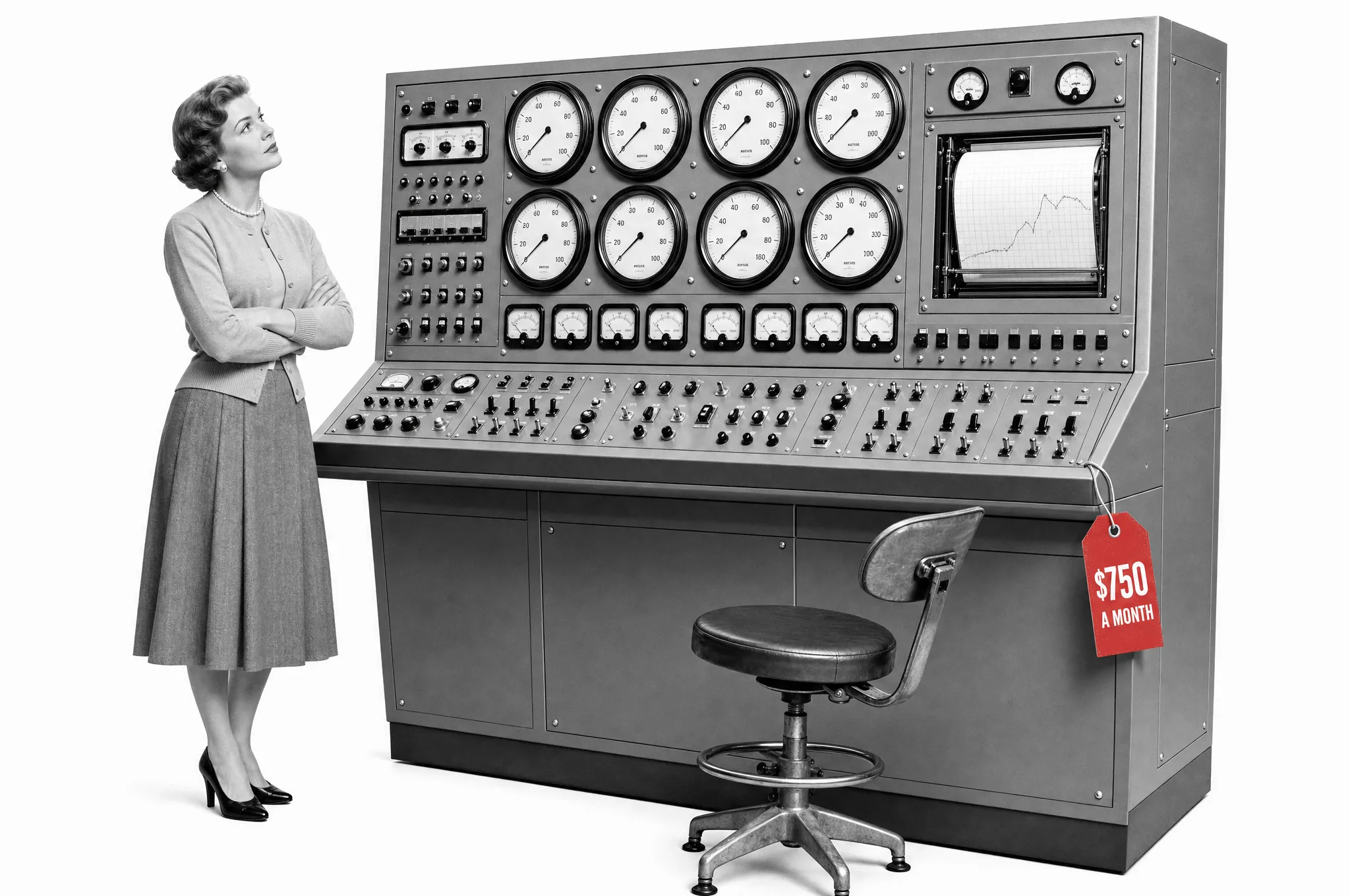
Polar Analytics builds some of the best dashboards on Shopify. In 2026 it also asks at least 750 a month for them. Whether that is money well spent or money set on fire comes down to a question most reviews skip: do you have someone who will open it every morning and act on what it says?
I run a market research company, so I spend my days around merchant data and the tools that promise to make sense of it. Polar is one of the good ones. It has also quietly moved upmarket, and the version you can buy today is priced for brands doing real revenue, not for a store finding its feet. If you are multi-channel, past a few million in sales, and you have someone to own reporting, it earns its place. If you mainly want profit or attribution answered without much fuss, cheaper focused tools will serve you better. This review is the long version of that verdict, with current pricing, the trade-offs, and the alternatives worth a look. All prices here are in US dollars.
What Polar Analytics actually is
Polar Analytics is a Shopify-native analytics platform that pulls your scattered data into one place. It was founded in Paris in 2020, has raised around 30 million in funding, and launched on the Shopify App Store in October 2020. The pitch has always been the same: stop living in fifteen browser tabs and read your whole business off one screen.
Under the surface it connects 45 or more data sources with one-click integrations, including Shopify, Amazon, Google, Meta, TikTok and Klaviyo, and lands them in a warehouse-backed platform you own rather than a black box. On top of that sit out-of-the-box dashboards for the numbers most operators care about: profit and loss, acquisition metrics such as ad spend, blended customer acquisition cost, ROAS and marketing efficiency ratio, retention through lifetime value and cohorts, and merchandising through product performance and inventory. When the pre-built views run out, you build your own metrics and reports.
The thing to understand about 2026 Polar is that it no longer describes itself as a dashboard. It now calls itself an AI analytics platform that grows revenue, and the product has grown to match. Alongside reporting it recovers Klaviyo’s missed abandoners, runs a server-side pixel for cleaner attribution, offers incrementality testing, ships an AI data analyst you can ask questions in plain English, and exposes a headless layer for teams that want to pipe Polar into their own tools. That expansion matters, because it is a big part of why the price looks the way it does now.
What you actually get for the money
Strip away the category language and Polar does three jobs.
The first is the single source of truth. This is the reason most brands buy it. Instead of one person exporting Meta, one exporting Shopify and a third stitching it together in a spreadsheet at 11pm, everyone reads the same numbers off the same platform, refreshed automatically. For a team drowning in manual reporting, that alone can justify the bill.
The second is attribution. Polar runs a server-side pixel and a set of attribution models, and it has added incrementality testing, which tries to measure the lift a channel genuinely causes rather than the conversions it merely takes credit for. Operators reviewing it on the App Store single out the multi-touch attribution and incrementality testing as the parts they value most. This is a real step up from a tool that just recolours the same last-click numbers Shopify already shows you.
The third is the newer revenue layer: the Klaviyo abandoner recovery, the email agent, the AI analyst. Useful, and clearly where the roadmap is heading, though this is also where you should read the pricing carefully, because several of these arrive as paid modules rather than as part of the base plan.
Here is the part the glowing reviews gloss over. Polar is a business intelligence tool wearing a friendly interface, not a plug-and-play dashboard. Its flexibility is the point, and it is also the catch. If you want a number to appear without anyone building the report behind it, Polar will feel like more than you bargained for. If you have someone who enjoys building a clean reporting layer and will keep it honest, that same flexibility is exactly why they will love it.
Polar Analytics pricing in 2026, and the GMV trap
Here is where the real 2026 story lives. Polar’s Core plan now starts at 750 a month, priced on your store’s online GMV, with discounts for annual terms. The bill rises as your revenue grows and, for larger brands, climbs well into the thousands a month at the highest GMV bands according to pricing trackers. Custom pricing kicks in for brands doing more than 20 million a year.
That 750 floor is the number to sit with, because it is a meaningful jump. Some directories still list Polar’s older tiers in the low hundreds a month, which tells you the direction of travel: the entry point has roughly doubled, the packaging has been split into modules such as Klaviyo Audiences, Advertising Signals and Incrementality Testing, and the whole product has repositioned toward brands with real budgets. Polar has grown up. If you remembered it as the affordable dashboard, that version is gone.
Now the trap, and it is the same one that sends people looking for a Triple Whale alternative. GMV pricing is a growth tax. Your bill goes up as your revenue goes up, whether or not you use Polar any more heavily than you did last quarter. Scale from 5 million to 15 million and the cost of looking at your own numbers scales with you. There is a coherent argument for it, that a bigger brand gets more value from clean data, but it is worth naming out loud before you sign, because it changes what “worth it” means at every stage of your growth.
Price the alternative honestly too, because 750 a month is 9,000 a year and that buys real things. It covers the upper tiers of a focused profit and LTV tool plus a dedicated attribution product with change to spare, or roughly a month of a good fractional analyst. The question is never whether 750 is a lot in the abstract. It is whether one source of truth, maintained for you, beats those two options for the team you actually have.
There is also a counterweight the growth-tax argument usually misses. Polar is warehouse-native, so the data and the modelling sit somewhere you own rather than inside somebody’s proprietary pixel. Leave a black-box rival and your reporting history largely starts again from nothing. Leave Polar and you keep the warehouse. That does not make the bill smaller, but it does change what you are buying: a reporting layer over your own data, rather than a subscription to someone else’s version of it. For a brand that expects to change tools once more before it stops growing, that is worth more than a feature comparison suggests.
Why incrementality testing is the real 2026 argument
If you are choosing between Polar and the closest all-in-one, the dashboards will not decide it. Everyone in this category builds those well now. Incrementality testing is the thing that actually separates them.
Attribution asks which touchpoint should get the credit for a sale, a question that quietly assumes the sale would not have happened otherwise. Incrementality asks the harder one: if you switched this channel off tomorrow, how much revenue would you genuinely lose? You answer it by holding a channel back in some regions and not others, then reading the difference. That is a different measurement rather than a prettier version of the same one, it survives the tracking loss described in the next section, and it is the part of Polar a cheaper profit tracker cannot replicate. If you spend enough that a wrong answer costs six figures a year, this is the line item that justifies the rest of the bill.
What the reviews really say
Polar holds a 4.9 rating across more than 100 reviews on the Shopify App Store, with 97 per cent at five stars. That is an excellent score, and the praise is consistent and specific: responsive support, thorough onboarding, the ability to build custom metrics and dimensions, and the relief of finally centralising dispersed data. When a brand says Polar changed how it reports, it usually means the spreadsheet nightmare ended. That is real, and it is the strongest thing going for the product.
Read the fine print, though, because the score is selection-biased. Polar sells through a sales conversation and onboards customers with a high-touch team, so the people leaving reviews are, by design, brands that were a good fit, cleared the sales call, and got hands-on setup help. That is a filtered sample, not the general public. It does not make the reviews dishonest. It does mean the 4.9 tells you how happy well-matched, supported customers are, not how a small store poking at a free trial on its own will fare.
You can see this in the negative reviews, because the only one-star reviews are about signing up, not about the product. One merchant is annoyed that you need a sales call before you can properly try it. Two more hit a wall on email verification and gave up within minutes. None of them actually used Polar. So the public downside is almost entirely about the gate in front of the door.
For the product cons you have to look at G2, where users flag the real trade-offs: a steeper learning curve than the plug-and-play crowd, custom or non-standard connectors that need a support specialist to wire up, and a thinner mobile experience. None of these are dealbreakers. All of them point the same way, which is that Polar rewards a team willing to invest in it and frustrates one that is not.
The attribution reality no dashboard escapes
One warning that applies to Polar and every tool in this category. Since Apple shipped App Tracking Transparency with iOS 14.5 in 2021, a large share of iPhone users opt out of the tracking that deterministic pixels depend on. No dashboard sees the whole customer journey any more. Polar’s server-side pixel and its attribution models are a genuinely good attempt to fill that gap, and incrementality testing is a smarter question to ask than last-click ever was, but none of it is ground truth. It is a well-built estimate.
So do not buy Polar, or anything else, expecting perfect attribution. The one read no pixel can fake is the customer telling you in their own words where they found you, which is why a post-purchase survey belongs in any serious measurement stack as the sanity check on whatever your dashboard is modelling, and why voice-of-customer tools sit next to the dashboards rather than under them. Treat Polar as your best modelled view and keep one honest, human data point beside it.
Who should buy Polar Analytics, and who should not
Buy Polar if you are a multi-channel brand past roughly 5 million in GMV, you are tired of manual reporting, you want acquisition, profit, retention and attribution in one place, and you have someone, in-house or fractional, who will own the reporting layer and actually use it. For that brand, Polar is one of the best options on the market and the 4.9 is not an accident.
Do not buy Polar if you run a smaller store, if you want answers without building the report behind them, if you only need one job done, or if a bill that scales with your revenue is the exact thing you are trying to escape. In those cases you are paying mid-market money for capability you will not touch.
If you only need profit and lifetime value, a focused tool such as TrueProfit or Lifetimely does that job for a fraction of the cost. If your real need is heavy paid-attribution rigour, Northbeam is built for brands spending north of 50k a month on ads. And if you want the closest all-in-one like-for-like, Triple Whale is the obvious comparison, though it prices on GMV in the same way, so switching to it solves the interface and not the growth tax.
Polar Analytics alternatives, by the job
The best Polar Analytics alternative depends entirely on which of Polar’s jobs you are actually replacing. Here is the shortlist by need.
| If you need | Strong pick | Why |
|---|---|---|
| The all-in-one dashboard | Triple Whale | Closest like-for-like, though also GMV-priced |
| Serious paid attribution | Northbeam | Built for 50k a month plus in ad spend |
| Profit and LTV, cheaply | TrueProfit or Lifetimely | Focused Shopify tools at a fraction of the price |
| Enterprise, warehouse-native | Daasity | Deeper data modelling for larger data teams |
| A free baseline | GA4 | Free, but not a blended, Shopify-native view |
GA4 is a complement rather than a swap. It is worth having in the stack whatever else you run, if only as the free second opinion when a number in your paid dashboard looks wrong.
Frequently asked questions
Is Polar Analytics worth it in 2026?
For a multi-channel brand past roughly 5 million in GMV that wants one source of truth and has someone to own reporting, yes. For a smaller store, or a team that only needs profit or attribution answered, no. At 750 a month and up, priced on your GMV, Polar is now a mid-market and enterprise tool, not an entry-level dashboard.
How much does Polar Analytics cost?
The Core plan starts at 750 US dollars a month, priced on your store’s online GMV, with discounts for annual terms. The bill rises as your revenue grows and climbs into the thousands a month for larger brands. Capabilities such as Klaviyo Audiences, Advertising Signals and Incrementality Testing are sold as separate modules on top.
What does Polar Analytics do?
It connects 45 or more sources, including Shopify, Amazon, Meta, Google, TikTok and Klaviyo, into one platform, then reports profit and loss, acquisition metrics such as blended CAC, ROAS and MER, retention through LTV and cohorts, and marketing attribution. You get out-of-the-box dashboards plus a flexible layer to build custom metrics and reports.
What is the best Polar Analytics alternative?
It depends on the job. Triple Whale is the closest all-in-one, though it prices on GMV too. Northbeam is stronger for serious attribution above 50k a month in ad spend. TrueProfit and Lifetimely are cheaper if you mainly want profit and LTV. GA4 is free but is not a blended, Shopify-native view.
Does Polar Analytics have a free trial?
Yes, there is a free trial, but signing up is sales-gated in practice. Several public reviews note that you need to clear a sales conversation before you get full access, and that self-serve setup can stall on things like email verification.
The one-line version
Polar Analytics is a very good platform that now charges accordingly. If you are big enough to need one source of truth and you have someone to run it, pay the 750 and do not look back. If you are not, buy the one job you actually need for a tenth of the price and keep a post-purchase survey honest next to it.